Sewage Pumping Engine, 1883-1884
Introduction
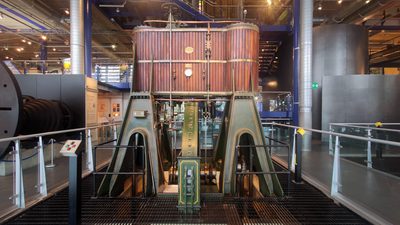
This engine was one of three steam engines used for 70 years to pump sewage into the River Humber at high tide.
Built in Birmingham by Messrs James Watt and Co, successors to the famous Boulton and Watt, the engine was completed in June 1884. It was capable of pumping 26,000 litres of sewage a minute. Before the pumps were installed, the river rose above the sewage outfall pipes at high tide. The pipes were then closed for eight hours a day, preventing the sewage from flowing into the Humber.
Facts and Figures
- Manufacturer: Messrs James Watt and Co, Soho, Birmingham
- Date built: 1883-1884
- User: Corporation of Kingston-upon-Hull
- Period of use: 1884-1957
- Location: West District Pumping Station, Kingston-upon Hull
- Engine type: Inverted compound returned connecting rod pumping engine
- Power output: 100 horsepower / 74.5 kilowatts
History
In the early 1880s, the sewage system in the west district of Kingston-upon-Hull was 20 years old. There were 152,000 people living in this part of the town. Unfortunately the town was very low-lying and at high tide the water level in the River Humber rose above the sewage outfall pipes. It became necessary to pump sewage into the river 24 hours a day. The solution was to install three pumps, each powered by a steam engine, which could raise the sewage by 7 metres before discharging it into the river.
The Birmingham company of Messrs James Watt and Co sold their steam engines around the world. Engines similar to this one were constructed for Salford Waterworks in 1879 and for Warsaw in Poland in the 1880s. This engine was named Rollit after Sir Albert Kaye Rollit the Mayor of Hull, who opened the pumping station on 6 June 1884. Normally only one engine was operated for eight hours a day but during periods of heavy rain all three engines would be required. There were six staff at the pumping station of whom three were on duty at each tide.
What's Special
People
The Hull News covered the opening of the pumping station on 6 June 1884.
The paper reported the speech given by Major Rollit as he opened the valve that supplied steam to the steam engines for the first time.
“His worship, in an interesting manner, referred to the transitions in the works of nature, which had marked the history of the past. Showing that before man called science to his aid in sanitary matters, plague and pestilence frequently broke out and devastated this and other countries. He contrasted those terms with the present, and said that in Hull the supply of water was so good that people had to pick out little bits of sediment for sake of finding fault. He felt that the pumping station had not been established a moment too soon, for the exhalation from the sewers would have been a great disadvantage to the health of the town and district.”
Related Videos
You can see this engine on display at Thinktank, Birmingham Science Museum. Find out more.