Smethwick Engine, 1779
Introduction
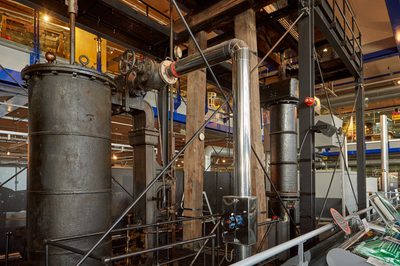
When James Watt designed the Smethwick Engine in Birmingham in 1778, it was the most efficient engine of the time.
It was needed to pump water to the top of the canal locks at Smethwick. When a boat went through the locks, 110,000 litres of water was used. Before the engine was installed only 50 boats a week could pass through. It took 35 men ten months to build the engine and engine house. Assembled on site, it cost £2,000 or £750,000 at today's prices. When completed up to 250 boats used the locks.
It is the world's oldest working steam engine.
Facts and Figures
- Manufacturer: Boulton and Watt, Soho, Birmingham
- Date built: 1779
- User: Birmingham Canal Navigation Company
- Period of use: 1779-1891
- Location: Smethwick
- Engine type: Condensing beam pumping engine
- Power output: 30 horsepower / 22.4 kilowatts
History
This engine was built to pump water to the top of a flight of locks at Smethwick. From the 1760s, canals carried goods made in Birmingham around Britain and, via ports, all over the world. The canal at Smethwick was built over a hill with six locks installed on either side. Unfortunately the reservoir at the top of the hill which supplied the water leaked very badly. With 100,000 litres of water used by each boat passing through the locks, water soon ran short. The engine lifted water 12 metres up six locks and ensured a constant supply.
When James Watt was asked to design an engine for Smethwick by Birmingham's Canal Committee in 1778 he used a new design. Existing steam engines, designed by Thomas Newcomen, were very expensive to run as they needed a lot of coal. They worked by cooling steam in the cylinder. Watt improved this design by condensing the steam outside the cylinder in a 'separate condenser'. His new engine was twice as powerful and three times more efficient. Watt also carried out tests on this engine, shortly after it was completed, to investigate the effect of different arrangements of valve gear.
After working until 1891, the engine was dismantled in 1897. Its owners, the Birmingham Canal Navigation Company, re-erected the engine at their site at Ocker Hill, Tipton. In 1919 the engine was especially steamed to celebrate the centenary of James Watt's death. Ocker Hill was closed in 1959 and the engine presented to Birmingham Museum of Science and Industry. After the construction of a new building to house it, the engine was steamed regularly between 1983 and 1997. Its continued operation in Thinktank, ensures that the Smethwick Engine remains the oldest working steam engine in the world.

What's Special
People
Watt apparently gave an account of his inspiration of a separate condenser to Mr Robert Hart, a Glasgow engineer:
“It was one Sunday afternoon, I had gone to take a walk in the green of Glasgow, when about halfway between the Herd's house, which stood near the present sight of Nelson's monument and Ahn's well, and myself having been naturally turned to the experiment I'd been engaged in for saving heat in the cylinder. At that part of the road, the idea occurred to me that as steam was an elastic vapour, it would expand and rush into a previously exhausted space, and that if I were to produce a vacuum in a separate vessel and open a communication between the steam in the cylinder and the exhausted vessel, that such would be the consequence. However, it occupied my mind so little, although confident of its success, that being engaged with other more pressing employments at the time, it was some months before I could put it to the test of experiment, and it was in that little workshop in King Street that I made the original model the results from which confirmed the correctness of my anticipation.”
Image gallery
Related Photos





Related Videos
You can see this engine on display at Thinktank, Birmingham Science Museum. Find out more.