News Story
By John Goodridge
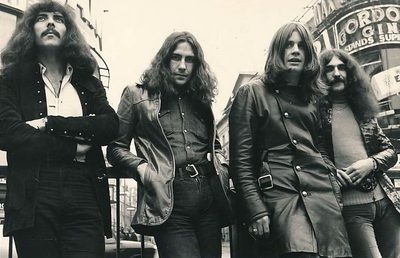
In his classic work, Revolution in the Head, Ian MacDonald called The Beatles’ songs a ‘kind of evolved folk music’. But how far had this new music evolved by the time Black Sabbath came on the scene? By the late 1960s bands like Cream were showing the world just how much rock music had come on in the years since Muddy Waters had first electrified the blues – how much force and volume could be summoned by two or three musicians standing on stage with guitars, drums and a big stack of Marshall amps. They controlled powers that the great orchestral composers of the nineteenth century would have killed for. And using this power to the full, Jimi Hendrix – who died the day that Black Sabbath’s first album was released in the UK, 18 September 1970 – had conjured up sound effects never tried or heard before, on that upside-down white Fender Stratocaster of his. The Beatles and their ingenious producer were similarly stretching studio production way beyond all known limits. And these changes were highly relevant to how Black Sabbath came to be such a force: they would learn from them all.
One way that they differed from many of their contemporaries was that they were a working-class band. They were not the first, of course. There had been The Troggs, for instance, whose bricklayer frontman, Reg Presley, told his workmates, ‘Share out me tools: I’m off!’, when he heard on the radio that the band were climbing the pop charts with ‘Wild Thing’. And before the pop boom, there was a long tradition of working-class poets fighting their way up into the light. But Black Sabbath’s peers generally had some social and cultural footholds. Many of them spent time at art school, for instance, where they would have developed an expectation to ‘do something creative’. But the destiny set for the key members of Black Sabbath was a lifetime of factory drudging – or worse, as in Ozzy’s early scrapes with the law.
The ‘metal banging’ factories of Birmingham were dirty, dangerous places, and Tony Iommi became a casualty of their carelessness with human beings when he lost several fingertips to an industrial guillotine. Being told he could never play guitar again drove him to create inventive solutions. Inspired by the example of the great jazz guitarist, Django Reinhart – who had only two working fingers on his left hand after being badly burned – Iommi experimented, melting plastic to make artificial fingertips, using banjo strings because he could not get light guitar strings (as you can nowadays), and tuning the strings down to make them slacker and easier to play. He turned what seemed like a disastrous disability into something that actually shaped their music and made it sound unique. Hendrix – that man again – had shown how, what often seemed the lightest of touches from his long, flexible fingers could generate immensely varied slabs of noise and effect. Iommi, with what was now limited flexibility in his fingers, created an intense sound of his own, using minor keys, discords, strange melodic combinations, and riffs that were powerful and clear. And along with Ozzy’s plaintive vocal powers, and the strong rhythm section of Geezer Butler and Bill Ward, this created the inimitable sound of Black Sabbath. Unlike their contemporaries, such as Led Zeppelin, who were blues based – or Deep Purple, ‘prog’ musicians who flirted with classical music – Black Sabbath had a sound as strikingly gothic as the dark image they curated.
And whereas Tony Iommi turned a physical disability into a shaping moment, Ozzy was dyslexic, school a torment of bullying and abuse for him, so his ability to belt out songs broke through the silence and expressed his suffering creatively. But before him there had been working-class poets who, for instance, had no literacy skills at all, like Sheffield’s popular radical filesmith, Joseph Mather (1737-1804), or the Scillonian, Robert Maybee (1810-91) who composed poems about shipwrecks on the islands: neither of these could read or write, but others wrote their words down for them and so they got published. Edward Rushton (1756-1814), the Liverpool sailor-poet, was unsighted, but like a number of other blind, labouring-class poets, also found ways to express his radical vision and get into print. Disability, like class, didn’t necessarily have to put a stop to self-expression, though the writer or artist had to be pretty determined.
I call Black Sabbath ‘working-class radicals’ because what they achieved was radical, in every way – radical as in challenging, transformative. A key element of this was their intense adoption of gothic imagery, starting with the name. It is familiar enough now, but in its time had real shock value: people wondered if they were maybe Satanists of some kind, and older people would have found the name alarming. But gothic ideas and imagery, as Nick Groom shows in his book on the subject, were always a challenge and a counter-cultural force, going way back through western civilisation. Poets like Thomas Chatterton (1752-70), who Wordsworth called ‘The Marvellous Boy’, used gothic imagery to critique their society, rebel against its norms, and make a strong impact. So, not content to labour in a dirty, dangerous factory, Black Sabbath expressed in music a kind of restless rebellion, using cultural tropes like gothic, horror (‘Children of the Grave’) and science fiction (‘Iron Man’), to express the frustration and yearning that had driven them into making music, instead of conforming. It won them serious attention.
Discordancy, blasts of sound, strange melodies and riffs, and the dark imagery in many of the early songs also reflected the era in which they lived. If a song like ‘War Pigs’ evolved from a celebration of wild, orgiastic freedom, into bitter rage at the warmongers of the world, this reflected what they would have seen and heard as they were growing up, such as the nuclear threat of the US/USSR superpower stand-off (known as ‘mutually assured destruction’ – MAD for short), or the Vietnam War, with its horrors and atrocities. This was the first televised war – and with no ‘embedded’ control and censoring of journalists, as there is now in war zones. In 1968, the year Black Sabbath came into existence, the world was ‘on fire’, as Joe Strummer remarked, with rebellion and conflict seemingly everywhere, and for the musicians that came soon after, it was like visiting the scene of a great battle, as Strummer put it.
Frustration and anger – personal and political – were key elements in the band’s developing style, their image partly a product of this. Improvisational energies were a vital resource, too. ‘Paranoid’, for example, arose from the need for a short filler song to complete an album, and began with a distinctive riff Tony Iommi had devised. It was quite simple (‘not technical’, as he modestly said in conversation with Brian May), but it worked. Adding Ozzy’s characteristically challenging lyric of frustration and fear completed the song, and made it perfectly memorable. Ozzy’s great hero was John Lennon (1940-1980), and he picked up something of Lennon’s edgy, challenging, style, a habit of speaking out and refusing to go along with the glibness of showbiz talk. Songs like ‘Paranoid’ reflect this influence: they are disruptive and aggressive, and they sound it as well as speaking it.
A working-class band, like working-class poets and writers of the past, had to make often limited resources work for them, to create something new and different, and Black Sabbath were masters at this – through Tony Iommi’s brilliant improvised guitar technicalities, Ozzy’s boldly singing out, or Geezer Butler drawing on his love of literature from schooldays to develop their lyrics. They fought their way up as a live band, winning popularity through the power and edginess in their work, its range of sonic resources. There was a large youth market for distinctive new music, live and on record, and they were able to tap into it, using the remarkable band image and adventurous sound. Their first three albums were very successful, and came to form the basis of what became known as heavy metal. And like The Beatles before them, they continued to experiment and develop their work, evolving further this ‘folk music’.
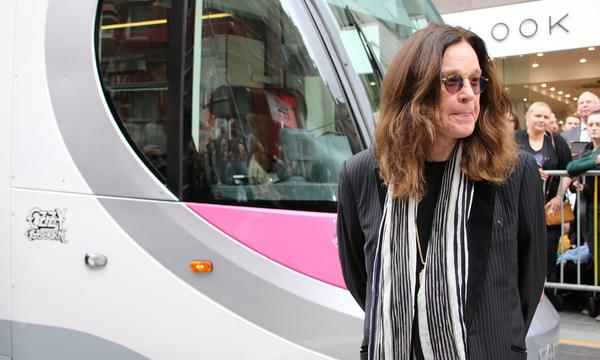
There was a lot of music snobbery in the 1960s and 1970s – from Robert Christgau’s ill-judged dismissal of Hendrix at Monterey, to Charles Shaar Murray advising The Clash to go back to their rehearsal garage, close the door and leave the car engine running. Sabbath attracted more than their share of it, and it was often class-based: their music was crude and clumsy, they couldn’t play, sing, etc. – just the kind of thing that had so often been said about working-class poets in the preceding centuries, particularly those with a radical or innovative agenda. And yet the band from Birmingham survived and transcended criticism, founding a hugely popular style of rock music. In the 21st century they reached the status of universally loved cultural icons, representing the best of their city’s creativity – no longer based around ‘metal banging’, but around ‘metal music’. Ozzy passed on in 2025, of course (as earlier had their other great singer, Ronnie James Dio, 1942-2010). But the other members of the band are still around and active, able to enjoy the respect and the opportunities that all their hard work and inventiveness has given them – and long may they continue to do so.
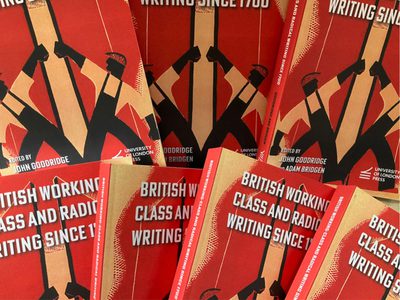
This post was inspired by seeing the popular exhibition, ‘Ozzy Osbourne: Working-Class Hero’ at Birmingham Museum & Art Gallery, when I came to the Museum in March 2026 to talk about the essay collection I edited with Adam Bridgen, British Working-Class and Radical Writing Since 1700 (University of London Press, 2025), from my years of studying working-class poets, and my own memories of the 1970s, when rock music meant everything to us.