News Story
by Josephine Reichert, Athac Creative Artists.
Athac Creative Artists at Birmingham Museum & Art Gallery, until 30 September 2026
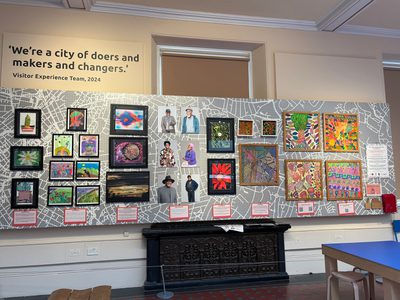
What happens when artists are given the time, relationships and support they need to develop their practice on their own terms?
This summer, visitors to Birmingham Museum & Art Gallery can find out.
Athac Creative Artists brings together the work of six artists: Dylan Hayes, Mehar Khan, Renée Parkes, Rose Anderson, Ryan Choon and Safina Hector, alongside artwork created through Athac’s family workshops. Working across painting, drawing, textiles, photography and digital work, the exhibition brings together artists whose work is rooted in lived experience, imagination, nature and personal expression.
The exhibition runs until 30 September 2026 and offers an opportunity to encounter the work of artists who have been developing their practices through mentoring, workshops, volunteering and supported professional opportunities.
For Athac, the exhibition is about more than putting artwork on a wall. It is about what can happen when barriers to participation are actively removed.
Creating pathways when opportunities are scarce
Athac is a Handsworth-based social enterprise supporting learning disabled and autistic children, young people and adults, as well as their families and carers. Athac was created because director Carol Reid was all too aware of the severe lack of cultural opportunities for learning disabled and autistic young people in Handsworth, due to the structures around them not being designed with their needs in mind. This is particularly true for learning disabled and autistic artists who want to develop professionally.
Athac’s Creatives Step Up programme was created in response to this gap. The programme works with artists to build pathways around their individual ambitions, combining long-term mentoring, practical placements, exhibitions, volunteering and workshops with time to develop their own artistic voice.
The approach is deliberately relational. Artists work with mentors who can support them to develop their creative practice while also navigating the practical realities of being an artist: exhibiting work, building an online presence, applying for opportunities, developing professional networks, volunteering and making decisions about their futures.
For some artists, access support might mean help with travel or communication. For others, it might mean breaking a process down into manageable stages, having someone alongside them during a new experience, or having the time and space to work out what they actually want to do.
From making art to becoming an artist
The journeys of the Creatives Step Up artists show how this support can build over time.
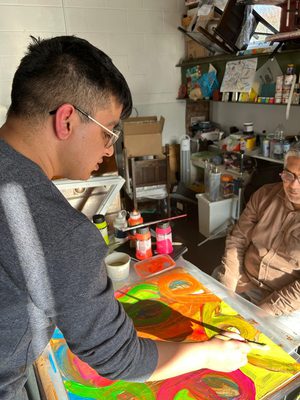
Ryan Choon has developed greater independence in his painting and drawing practice, experimenting with scale, composition and process. He is now working on the next stage of his development: presenting his artwork in a solo show.
For Mehar Khan, mentoring has supported a shift from simply making work to thinking about how work is selected, framed, titled and presented. She has also developed her practice through volunteering at family workshops at Ort Gallery, building confidence and skills that could lead towards future leadership opportunities.
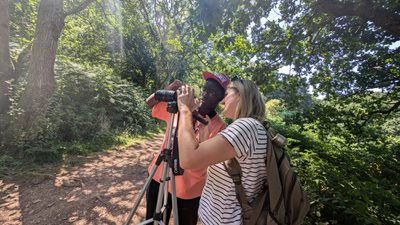
Safina Hector set goals around developing her photography, building an online presence and increasing her confidence in communicating about her work. She has since exhibited, entered competitions, developed her photographic practice and taken on volunteering roles with the National Trust.
Renée Parkes has been developing her relationship with materials and inspiration, identifying polymer clay and photography as an important part of her practice while building her confidence through volunteering at Athac’s own family workshops.
Each artist’s development is very different. There is no single pathway into a creative career, and there is no single model of support that will work for every artist. Athac’s approach starts with the individual artist: their interests, ambitions, communication style, access needs and pace of development.
Why this matters beyond the gallery
The need for this kind of individualised, sustained support is not confined to professional artists.
Athac also works with families who can face significant barriers to accessing cultural and creative activity. Its family programmes provide sensory, creative and cultural experiences for children and young people who may have few opportunities to take part outside school or home.
Parents have described the impact of this access in powerful terms: One parent explained that, before engaging with Athac, their family did not leave the house with all three children. Through the programme, they developed the confidence to go out together, including into the countryside and discover new possibilities for their children.
Another parent described Athac’s individualised activities as “life changing” for their child, who discovered a passion for music through opportunities tailored around their needs.
These experiences share the same principle at the heart of Creatives Step Up: access is about having the support, flexibility and confidence to participate meaningfully once you are there. Families have reported reduced stress, increased confidence and social interaction and greater confidence in accessing mainstream cultural venues.
What changes when artists are visible?
For Athac, placing this work in Birmingham Museum & Art Gallery matters because visibility matters.
Seeing learning disabled and neurodivergent artists represented in a major cultural institution changes what audiences see as possible. It also matters to other disabled people and families visiting the exhibition: they can see artists who share aspects of their lived experience occupying space within a major cultural venue.
The exhibition also creates an opportunity for audiences to encounter the artists’ work on its own terms. The work is diverse, personal and ambitious. It is connected by the artists’ experiences of growing up in Handsworth, their relationships with neurodivergence and learning disability, and their shared interest in art and nature as spaces for expression, calm and connection.
This is why representation matters, because visibility can expand our collective understanding of who gets to be an artist, whose work gets taken seriously and what an artistic career can look like.
Building a different kind of cultural future
By removing the barriers around learning disabled and autistic artists, they develop a stronger sense of authorship, build professional skills, find new creative specialisms, take on volunteering roles, exhibit artwork, develop networks, make decisions about education and employment and begin to imagine futures that previously felt out of reach.
Athac’s ambition is to demonstrate a different way of working that puts the individual at the centre. When access is designed with care, time and trust, learning disabled and autistic artists can lead, inspire and shape the arts. The exhibition at Birmingham Museum & Art Gallery is one part of that journey.
We invite you to come and spend time with the work, discover the artists’ practices and see what becomes possible when creative potential is given the space to grow.
Athac Creative Artists & Family Workshop Group Exhibition
1 July – 30 September 2026
Birmingham Museum & Art Gallery, Chamberlain Square, Birmingham
The exhibition includes audio description and a walkthrough video, with access and visitor information available through Birmingham Museums.
You might also like...
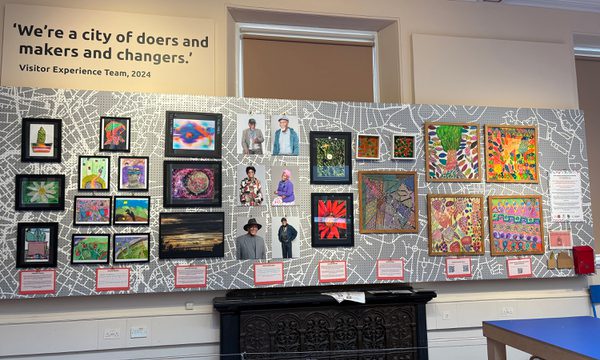
New community display celebrating inclusive heritage and arts opens at Birmingham Museum & Art Gallery
1 July 2026
Community exhibition celebrating Yardley’s history opens at Birmingham Museum & Art Gallery
2 October 2025
Birmingham Museum & Art Gallery Exhibition Celebrates Artists with Learning Disabilities and Autism
5 September 2025