News Story
by Ankhobia (Vibes Project Officer, 2003 - 2005)
Returning to Birmingham Museums after 21 years to reconnect with VIBES has been a deeply rewarding experience. The original Vibes: A History of Urban Music project, which I worked on as VIBES Project Officer between 2003 and 2005, with Sarah Blackstock as Project Manager, was an important chapter in my professional journey. Little did I know that, more than two decades later, I would have the opportunity to revisit the collection and bring some of those stories back into conversation.
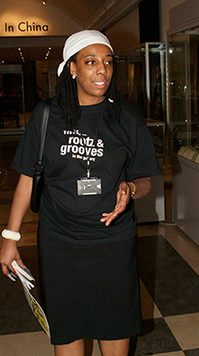

Listening again to the interviews, hearing the voices and stories of the people I had spoken with, filled me with an unexpected warmth and genuine joy. It was like reconnecting with an earlier part of myself. The knowledge and experience I gained through VIBES continued to inform my subsequent work, including Three Continents, One History: Birmingham, the Transatlantic Slave Trade and the Caribbean, as well as my work in broadcast journalism and, more recently, exhibition design for Simmer Down Arts. Revisiting the original recordings brought me back into direct contact with the research, conversations and people at the heart of the project. It reminded me of the richness of that work and how much it has continued to contribute to my professional journey.
I was particularly touched by the lengths Siobhán Stevenson, Oral History Participation Curator, went to in order to reconnect with me. Having completed the original project, I had assumed that once it formally concluded in 2006, the museum had moved on and that its involvement in the ongoing conversation around VIBES had largely come to an end. Siobhán's enthusiasm and determination genuinely reignited a spark in me. It gave me renewed hope that cultural organisations could play an active role in carrying these narratives and journeys forward, rather than allowing them to become something we simply look back on.
The 2026 workshops, Tracing the Roots of Urban Music – From the Caribbean to Birmingham, provided an opportunity to revisit some of the histories held within the collection while inviting people to reflect on their own musical journeys, memories and cultural experiences. I believe this has helped give the collection renewed relevance and resonance. The original interviews documented important experiences and histories, but their value grows when people have opportunities to engage with them, recognise connections to their own lives and contribute their own perspectives. It is through this continuing exchange that an archive becomes a living resource rather than simply a record of the past.
Reflecting on the workshops also made me consider how community engagement has evolved over the years. I wouldn't necessarily say that my understanding of oral history or the importance of working with communities has changed. The principles that informed my work in 2003–05 remain just as vital to me today: listening, creating space for people to share their experiences and recognising the value of their knowledge. What I have appreciated in 2026 is the opportunity to revisit the original collection with participants and create new conversations around it. Each generation brings different experiences, perspectives and questions, and we must continue to find ways to make our histories meaningful and accessible.
One of my strongest reflections is that reconnecting people with their heritage is an ongoing effort. It is not enough to collect stories, preserve recordings and place them in an archive. We must continue to share them, make them accessible and introduce them to wider audiences. There is still so much work to do across society. We cannot assume that cultural knowledge and history will automatically be passed from one generation to the next. There are younger people who have little connection with the histories, experiences and cultural contributions that have helped shape their families and communities. Equally, there are older people who have stories, memories and experiences they still want to share, drawing upon their recollections of music and the role it has played in their lives. Creating opportunities for these generations to connect, exchange experiences and learn from one another is an important part of keeping our cultural heritage alive.
Professionally, returning to VIBES has given me the opportunity to revisit an important body of research, refresh my knowledge and reconnect with an aspect of my work that I truly love. It has also encouraged me to recognise the continuing value of my contribution to cultural heritage and oral history, and to step forward with renewed confidence. Rather than feeling that this was simply a return to something I had done many years ago, I feel that it has opened up possibilities for what I can do next.
I will continue to carry this commitment into all aspects of my work and wider life: as a writer and poet, through workshops, in conversations within wider society and as I travel. Championing African, Caribbean and Black British histories and cultural contributions has long been an integral part of my work. Returning to VIBES has strengthened my resolve to continue creating opportunities for people to connect with their heritage and ensuring that these stories reach audiences who might otherwise never encounter them.
I am grateful to Birmingham Museums, and particularly Siobhán, for creating the opportunity to reconnect with this work. It has reaffirmed something I have believed for many years: this work is just as vital now as it was then. Heritage is not simply something we preserve from the past. It is something we continue to explore, share, celebrate and carry forward. The stories are still here, the music is still speaking, and there is much more work to do.
You might also like...
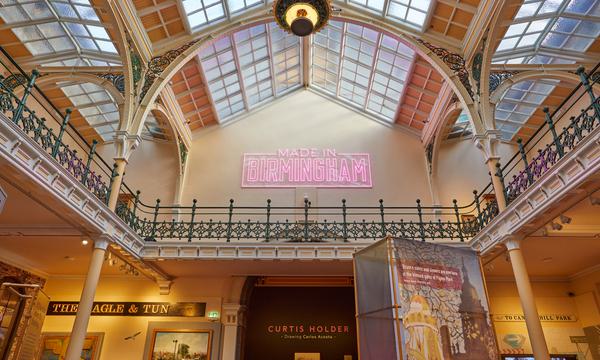
Birmingham Museums Trust awarded funding to develop plans for the future of Birmingham Museum & Art Gallery
18 November 2026
Birmingham Museums Trust announces new trustee and director appointments
17 November 2026
Birmingham Museum & Art Gallery among local landmarks included on new edition of MONOPOLY: Birmingham
5 November 2026