News Story
I love love. Within that, I love the symbols, gestures and tokens used to express this profound emotion. A dozen red roses, a stuffed, plush teddy bear reading ‘I LOVE YOU’, across its fur-ridden chest, a heart-shaped box of champagne truffles and, of course, Valentines cards.
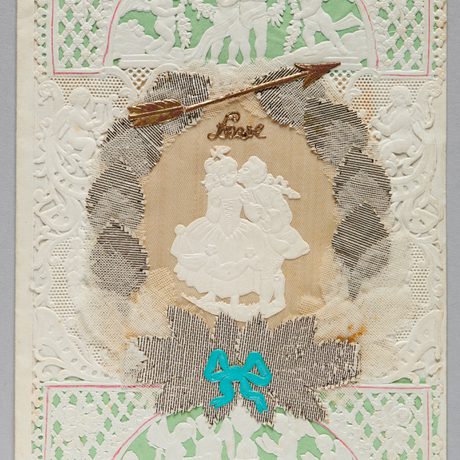
In writing my proposal for this Fellowship, I was determined to learn the ways in which emotion, and love by extension, can be contained in objects. How do you communicate your love to someone? What does that love look like? Is it floral, golden, and bathed in angels? Is Cupid at your side, with a bow and arrow, ready to puncture your lover?
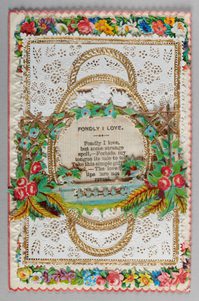
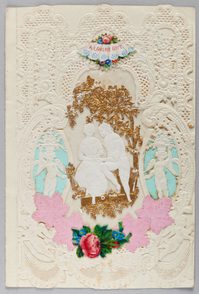
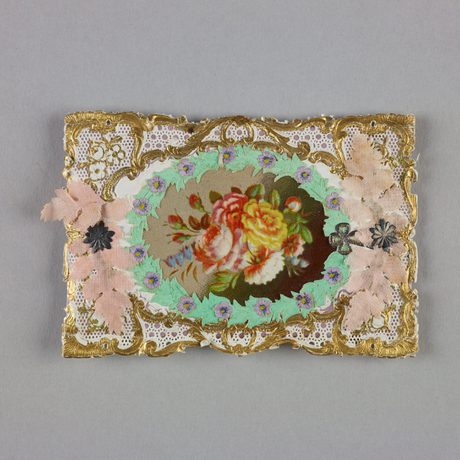
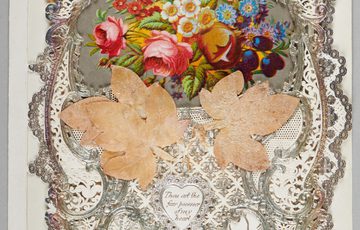
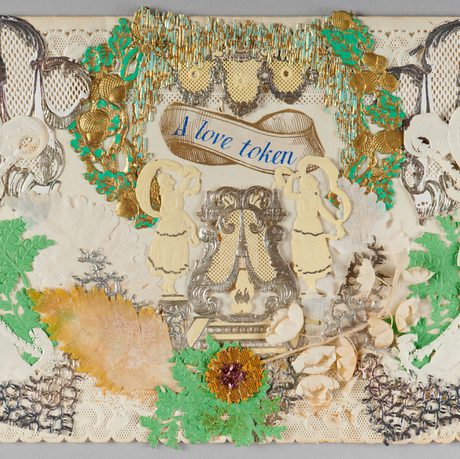
As I begin to explore the analogue within my own work - through printmaking, handicrafts and calligraphy - I look to the Valentines cards of the Victorian age (1837-1901), for their exquisite maximalism, attention to detail, and refined use of numerous specialisms; paper lace and embossing, chromalithographic printing, gilding, and collage.
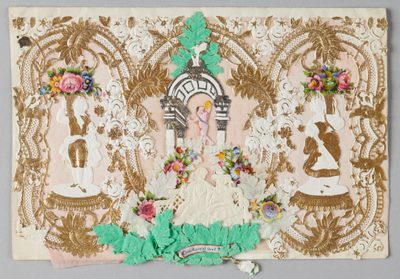
Besotted by the Arts and Crafts movement (c. 1860-1910) - rising in opposition to mass mechanisation, which diminished the need for the artist’s hand - the Victorian Valentine reflected the aesthetic tastes of the time. An invention enabled by a more affordable postal service, for the middle and upper classes, the Valentine marked a mid-point between handicraft and industrialisation.
These cards, largely sent anonymously, were designed to be kept and treasured as a lifelong gift, unlike the disposable, digitally printed Valentines we see today. Many of the cards within Birmingham Museums’ collection remain in remarkable condition, displaying a testament to their material quality, despite their inherent delicacy.
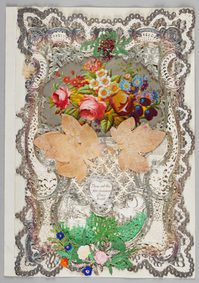
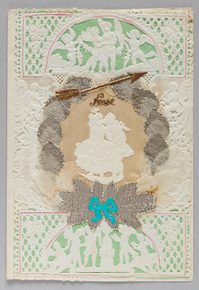
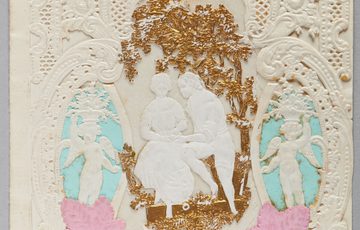
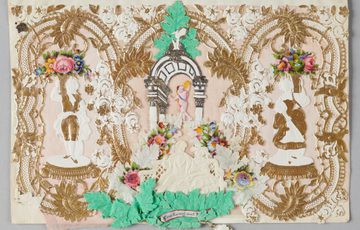
There is a pageantry to these works, hidden away in the temperature-controlled collections of Birmingham Museums, as adoration sits at the heart of their design. Angels are framed by frilly, floral embossed lace, with die-cut fruits and flowers layered in abundance. Each image is codified: red roses for romantic passion, angels for protection, and leafy green foliage for growth and renewal.
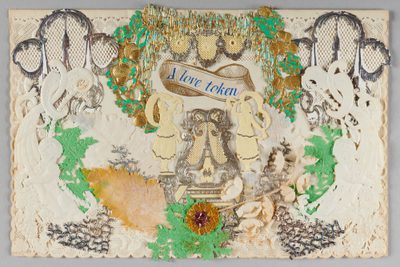
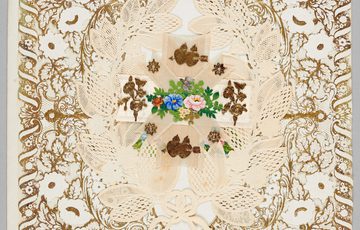
The patterns within the paper lace frames, or ‘cabinet cards’ as they are more accurately described, use repeat tessellating patterns, informed by the beauty of Persian and Islamic design principles. These motifs, latticed and ornamental, are reflective of the Empire’s desire to seize and marry diverse cultures, appropriating them as a distinctly English aesthetic.
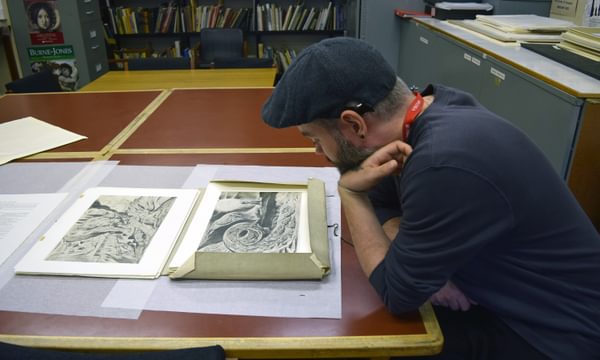
The delicate ritual within their symmetrical, hand-crafted construction is mirrored in the present day, as gloved hands carefully procure pristine, white boxes - one by one - from half a dozen drawers and storage shelves at the Museum Collection Centre. Each box is placed with care in front of me, as I peel back endless layers of tissue paper to get to the treasure.
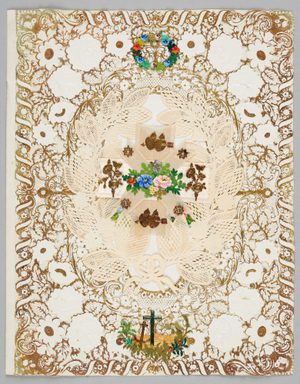
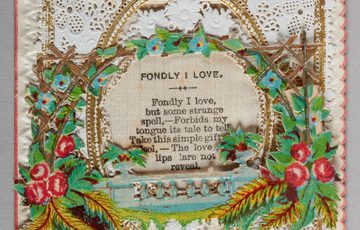
The commonalities I’ve found in these works are that they’re seeped in faith and adoration. Printed poems in faded ink feel biblical, threading through ‘thee’, ‘thy’ and ‘thou’. Present in the paper lace, doves and buds of red roses, are the broader Victorian social attitudes towards love and life. In a post-Enlightenment age, many religious peoples persisted in their beliefs, with this faith delicately reflected through craftsmanship. Craft, I now understand, can be read as a form of worship.
The research I’ve undertaken and the materials I’ve explored throughout this Fellowship, have signified to me the importance of love and integrity in art, and a reminder for myself to express that love for others in earnest. This work has opened up my research and practice in ways I could never have foreseen, and I greatly thank the Birmingham Museums team for their unending support.
All images courtesy of Birmingham Museums Trust. See more of the Valentine collection online.
By Leah Hickey,
Artist in Residence (Whitworth Wallis Fellowship)
About Leah
Leah Hickey is an artist and writer informed by heartache, a term she uses to mediate between grief, love, limerence and loneliness. She explores this through a diaristic research journal, ‘Emotional Outbursts’ (2022-present), a collaborative memorial engraving practice, and typographic design. Hickey’s work is emotionally led and influenced by women on screen, Romantic thought and Christian morality.