News Story
The special open day will take place on Saturday 9 May
Museum Collection Centre is the main store for around a million items
Artists, writers and makers will work with museum objects to explore the stories behind the collection.
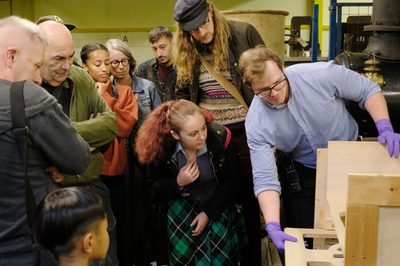
A special open day at the Museum Collection Centre in Birmingham is offering the public a rare opportunity to experience the city’s stored collections through contemporary artistic interpretation on Saturday 9 May.
The Museum Collection Centre is the main store for Birmingham Museums, holding around a million items. The open day will provide access to this significant resource while highlighting the role of artistic practice in reinterpreting museum collections for modern audiences.
The event will see artists, writers and makers working directly with museum objects throughout the day, producing new responses that reinterpret the collection and explore the stories behind it.
Visitors will be able to observe and participate in a range of activities, including live demonstrations, hands-on workshops and artist-led engagement.
Featured contributors include poet Bradley Taylor who will create live, bespoke poetry in response to objects and audience input, printmaker Haseebah Ali leading a lino printing workshop, artist and performer Tat Vision leading a specially developed tour and Stirchley Printworks giving live printmaking demonstrations and producing a special edition print during the event.
The open day forms part of Birmingham Museums’ commitment to broadening access to the city’s collections and encouraging new ways for audiences to engage with heritage.
Pre-booking is recommended and tickets are available through the Birmingham Museums website. Local residents living in the Nechells area (B7 postcode) are eligible for free entry with proof of address.
Alex Chalkley, collections access officer at Birmingham Museums Trust, said:
“This open day is about breaking down barriers between people and the collection.
“It will transform the museum into a creative studio, where visitors can meet artists, try new techniques, and see how historical objects can inspire contemporary creativity.
“Whether you want to make something, listen to poetry, or explore the collection from a new perspective, there will be opportunities for everyone to engage.”