News Story
By Kingston Myles
Director of Enterprise and Innovation
Birmingham Museums Trust
I’ve been thinking a lot about relevance since we completed our citizens’ jury work, and what part my role plays in this. I keep coming back to the questions we’re asking at Birmingham Museums Trust:
“Who are museums for in a city like Birmingham?” and “who are we still not reaching?”
Because the reality is, for a lot of people, museums still don’t feel like they are for them.
I know that from my own experience. Growing up, museums were a school trip rather than a family day out. Even as a young adult, I never really saw their relevance for me, and I had the opportunity to visit some great museums while I studied at Oxford Brookes. It’s a story for another blog post how I ended up in this role, and how my museum career started in Oxford.
Through the Birmingham Museums Citizens' Jury, citizens of Birmingham told us that clearly. They want something more engaging, more current, more connected to their lives.
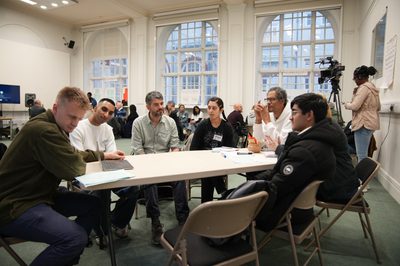
One comment stayed with me:
“Make it something we can experience, not just look at.”
The project we’ve nicknamed Electric Museum starts there.
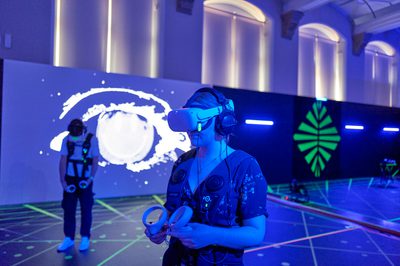
Electric Museum is a new space focused on immersive technology, particularly virtual reality, as a way of sharing and shaping heritage storytelling. It’s also a gateway to enable digital skills in Birmingham and an expansion of the museum’s visitor offer. Arts Council England has now formally recognised Digital Arts as a new national artform, the first time a new discipline has been introduced in decades. This isn’t a niche area anymore. It is being recognised as central to how culture is made and experienced going forward.
That shift reflects what many of us have already seen. We’ve dipped our toes into the water with immersive VR experiences before. 2024 saw Birmingham Museum & Art Gallery host ‘In Pursuit of Repetitive Beats’ - an exploration of rave and dance culture set in the region and created by East City Films. Our visitors loved it and hosting this has sparked a demand from both content creators and our visitors for more.
Digital work is not just a tool to support interpretation. It is the creative practice itself. It shapes how stories are told, how audiences engage, and what participation can look like. Electric Museum is our way of responding to that shift, not catching up with it. And we’re not doing this alone.
Electric Museum is a collaboration with MBD, an Arts Council England National Portfolio Organisation with deep expertise in immersive storytelling. That partnership matters.
MBD bring the creative and technical depth. They have built and toured multi-person VR experiences, and they understand how to make this work land with audiences. Their data shows that when immersive experiences are done well, the response is overwhelmingly positive, with the vast majority of audiences rating them highly.
We bring the space, the audiences, the networks and the long-term commitment to embedding this within Birmingham.
Together, that creates something that neither organisation could do on its own. It also reflects something bigger. The future of this kind of work sits between disciplines. Between museums, digital practice, creative technology and community engagement. Partnerships like this are how that future actually gets built.
Electric Museum is not a single experience. It is built to evolve over time and is founded on three connected strands:
- Shared immersive experiences where groups move through stories together
- Engagement activity that uses immersive work as a starting point for learning, discussion and collaborative work
- Skills development that gives people access to tools, training and creative pathways
You might come in as an audience member, take part in a workshop, develop skills, and then contribute to future work. That circular model is deliberate.
We talk a lot about access in museums. But access is only part of it. The bigger question is ownership. Who feels like this belongs to them?
Another line from the citizens’ jury that stuck with me:
“It should feel like it belongs to Birmingham, not just the museum.”
Electric Museum creates space for people to take part, build skills, and shape what happens next. Not just to consume content, but to influence it.
There is also a reality here. If we want to keep doing this kind of work, it has to be viable.
Electric Museum will bring together ticketed immersive experiences with funded engagement and skills activity. That balance matters. It allows us to generate income while still focusing on inclusion, participation and long-term impact. It also creates something that can grow beyond Birmingham. Digital experiences can be shared, adapted and presented elsewhere. That opens up collaboration and new ways of working across the sector.
This project sits at the intersection of a few things that are all moving at once.
Digital Arts is now a recognised part of the cultural landscape. Digital inclusion is a national priority. Audiences are expecting more interactive, participatory experiences.
Electric Museum brings them together in a practical way. It creates a space where people can experience, learn and create using the same tools that are shaping contemporary culture.
The first step is complete. The purchase and installation of the core equipment required to operate. This project is funded by the UK government through the UK Shared Prosperity Fund. The UK Shared Prosperity Fund aims to improve pride in place and increase life chances across the UK, investing in communities and place, supporting local business, and people and skills. The next step is programming, designing and sourcing content. That will take a little bit of time, but because the infrastructure is now in place, we can be confident about showcasing digital content without equipment being the barrier anymore.
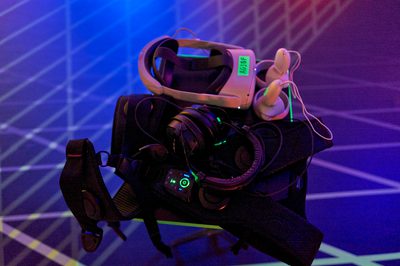
This funding has allowed us to install both 6-Degrees of Freedom Pico Headsets and 3-Degrees of Freedom Pico Headsets. We’ll be able to work in a room built for both co-location and simple playback to showcase a variety of content. The upper balcony in the space will allow visitors to observe playback and we’ll be adding content upstairs to further explore the stories behind VR technology. There’s a detail in the room itself that I love – the motion tracking graphics for the “6DOF” headsets are inspired by the friezes installed in the gallery above – it's a subtle detail but once you spot this, even the room itself without the technology on looks and feels amazing.
Success is not just about numbers.
It looks like new audiences choosing to engage because it feels relevant.
It looks like people gaining skills and confidence with technology.
It looks like Birmingham’s stories being told in ways that feel current and alive.
Most of all, it looks like people feeling that this is something they are part of.
This will evolve.
We will test things, learn quickly, and keep listening. That is the only way this works. We’ll continue to embody our organisational mantra: “Good enough for now, safe enough to try.”
I’m really looking forward to inviting groups and partners to experience the space over the coming months. I’m also looking forward to sharing wider public sessions and programmes as they develop.